
10 Smart Ways to Plan a Kitchen Renovation on a Budget
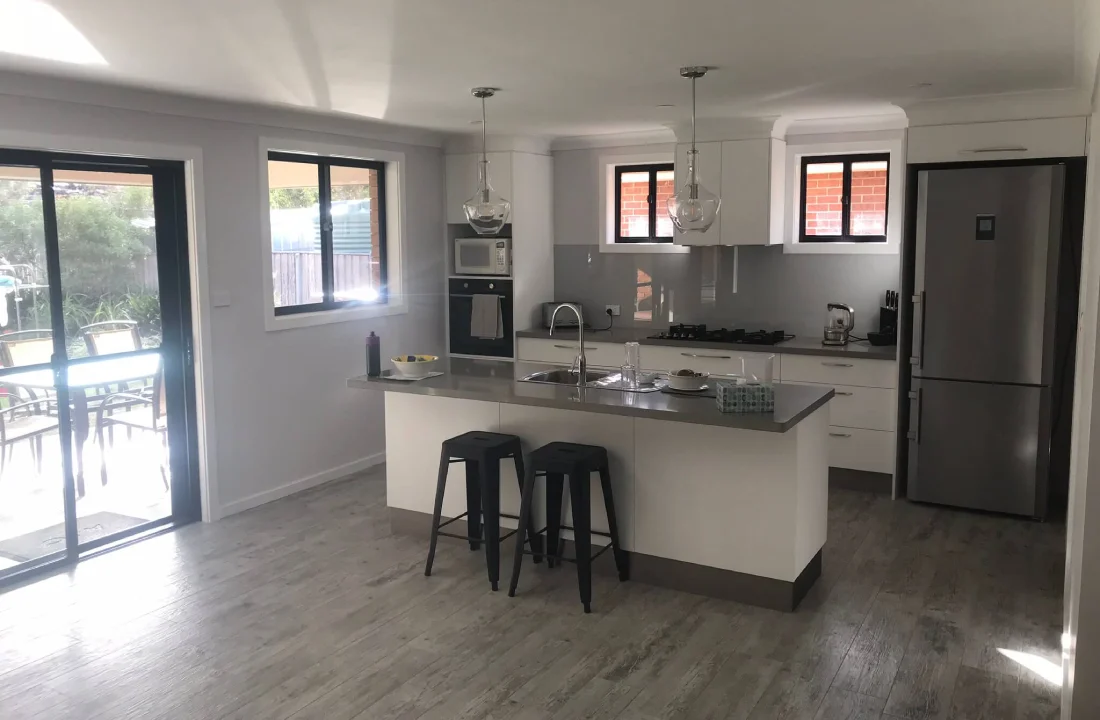
The most affordable way to renovate a kitchen is to keep the existing layout, update usable cabinets, and choose durable, budget-friendly materials. That said, always set a budget, compare contractor quotes, and keep some money aside for unexpected repairs before you begin.
With a little planning, you can improve storage, make everyday tasks easier, and give your kitchen a more modern look without starting from scratch. The key is to identify the changes that will make the biggest difference and avoid paying for features you do not need.
- Set a Realistic Budget Before You Start
The first step is deciding how much you can spend on your kitchen renovation. Your budget should account for materials, labour, installation, appliance purchases, and potential repairs.
Start by separating essential improvements from optional upgrades. This makes it easier to allocate money towards functional improvements before considering decorative features.

Decide Your Maximum Spend
Establish a maximum budget before requesting quotes or visiting suppliers. Include all expected expenses rather than focusing only on cabinet and benchtop prices.
Compare your available funds with the work your kitchen actually requires. If the figures do not match, reduce the scope rather than removing essential repairs or compromising safety.
Understand Typical Kitchen Renovation Costs
The following figures are illustrative planning ranges for Australian homeowners, not fixed prices or contractor quotations. Actual costs depend on kitchen size, material selection, labour, existing conditions and the work included.
| Renovation Type | Indicative Budget | What It Might Include |
|---|---|---|
| Cosmetic Refresh | $2,000–$10,000 | Painting, new handles, lighting, minor repairs and selected surface updates |
| Targeted Renovation | $10,000–$25,000 | Cabinet refacing, benchtop replacement, splashback improvements and selected appliance upgrades |
| Full Renovation | $25,000–$50,000+ | New cabinetry, benchtops, appliances, installation and associated trade work |
Create a Cost Breakdown
Divide your budget into categories before approving any work. This helps you identify expensive items early and adjust your selections before ordering materials.
Consider cabinetry, benchtops, appliances, flooring, lighting, plumbing, electrical work, installation, and waste removal. Allow around 15%–20% as a planning contingency, especially when the property’s condition or hidden services are uncertain.
Money-saving Tip: Keep your contingency separate from your planned spending. Do not use it for optional upgrades before the essential work is complete.
- Keep the Existing Kitchen Layout
Keeping the existing kitchen layout is one of the most effective ways to control renovation costs. Moving sinks, cooktops, plumbing connections, and electrical points can require additional labour, materials, and installation requirements. Before redesigning, assess how well the current arrangement works.
Work Around Existing Services and Appliances
Plan your new cabinetry around existing plumbing and electrical locations wherever practical. Measure appliances carefully before choosing cabinet widths, benchtop heights, and storage configurations.
However, you should not keep an existing layout simply to save money if it creates accessibility, safety, or functionality issues.
When Is Changing Your Kitchen Layout Worth the Cost?
Changing your kitchen layout may be worth it if you have hard-to-use corners, limited prep space, or difficulty moving between key work areas. It may also be necessary if the existing plumbing, electrical connections, or cabinetry are damaged.
Before making changes, compare the benefits with the total cost of moving plumbing and electrical connections, repairing affected surfaces, and installing new cabinets.
- Update Kitchen Cabinets Instead of Replacing Them
Kitchen cabinets make up a large part of your renovation costs. If the cabinet frames are still in good condition, updating their appearance may cost less than replacing them.
Check the cabinet doors, hinges, shelves, and interiors to see what needs repairing or updating. However, if they have water damage, swelling, or weakened frames, replacing them may be the better option.

Painting, Refacing, or Replacing Cabinets?
Each option suits a different budget and condition. Compare the alternatives before selecting a solution.
| Option | Relative Cost | Best Suited for | Main Consideration |
|---|---|---|---|
| Painting | Lowest | Sound cabinets with outdated finishes | Thorough preparation is essential for a durable result |
| Refacing | Moderate | Good cabinet boxes with worn doors or finishes | New doors and panels must fit the existing structure |
| Full Replacement | Highest | Damaged cabinets or substantial storage changes | Includes more materials, removal, and installation work |
Replace Handles, Hinges, and Damaged Parts
New handles can give your existing cabinetry a fresh look at relatively low cost. Replacing old hinges, drawer runners, or damaged cabinet doors can also make your kitchen easier to use.
When only a few cabinet sections are damaged, selective repairs may avoid the expense of replacing the entire kitchen.
Practical tip: Spend money on cabinet repairs before decorative upgrades. A fresh finish won’t fix problems caused by loose fittings, water damage, or deteriorating cabinet structures.
- Choose Affordable but Durable Materials
The materials you choose affect both your kitchen renovation costs and future maintenance expenses. Cheaper materials may not save you money in the long run if they wear out quickly or need costly repairs.
Compare appearance, durability, cleaning requirements, and installation costs together. The best choice should suit your household’s needs, last well, and not cost extra for features you do not need.
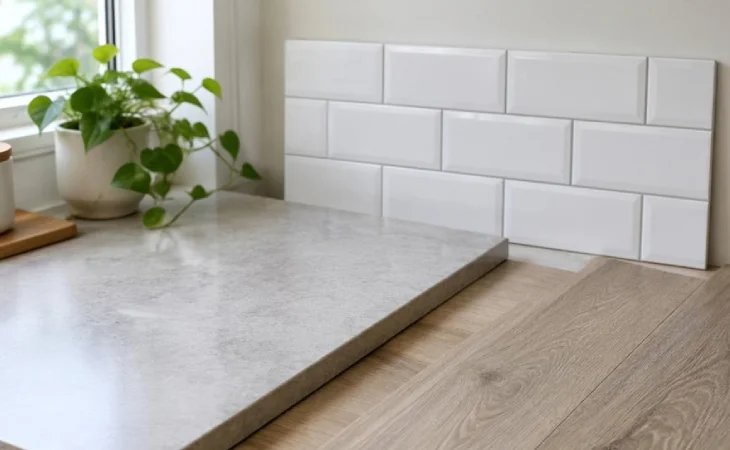
Select a Cost-effective Benchtop
Modern laminate benchtops offer a range of colours and patterns, including finishes inspired by natural stone and timber. Consider how the surface will handle heat, scratches, moisture, and everyday cleaning. Follow the manufacturer’s care instructions, particularly around joints, sinks, and exposed edges.
Other alternatives include solid-surface products, suitable porcelain surfaces, and natural stone. Compare the costs before making a final decision.
Compare Affordable Flooring Options
Vinyl, laminate, and suitable ceramic or porcelain tiles provide practical flooring choices at different price points. Compare their water resistance, underfoot comfort, maintenance needs, and installation requirements.
Check whether the existing floor needs levelling or repairs before installing a new covering.
Update the Splashback without Overspending
Splashback protects walls from cooking splashes and moisture while also improving the kitchen’s overall appearance. Ceramic tiles are a common option, while suitable panels can provide a different finish.
Before choosing a surface, confirm its suitability for the location, particularly behind cooktops where heat resistance and installation requirements matter.
- Improve Storage Without Overspending
Storage can make a kitchen feel more spacious and organised without requiring a complete redesign. Start by identifying where clutter accumulates and which cupboards are difficult to use.
Deep drawers, adjustable shelves, pull-out organisers, and properly planned pantry storage can improve accessibility. Prioritise changes that address genuine daily problems rather than adding storage accessories everywhere.
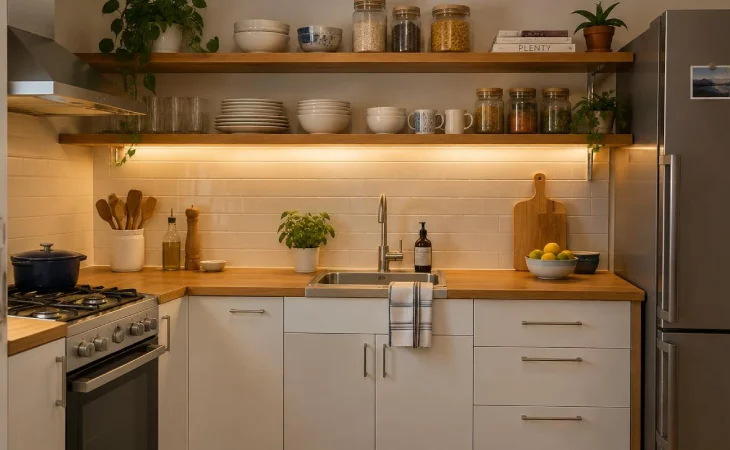
Use Open Shelving Selectively
Open shelving can reduce the amount of cabinetry required in some designs. It may also make a small kitchen feel visually lighter. Use them for frequently accessed dishes or decorative items rather than replacing every cupboard with exposed storage.
Know When Cabinets Are Better
Closed cabinets generally suit kitchens that need concealed storage for cookware, food supplies, and cleaning equipment. They can also reduce the time needed to keep the room looking tidy.
Compare the cost of open shelves with the complete installation requirements, including suitable wall fixings and finishing.
- Keep Working Appliances and Shop Strategically
Replacing every appliance can increase renovation costs without improving daily functionality. If your existing fridge, oven, cooktop, and dishwasher work reliably, consider keeping them until replacement.
Measure their dimensions and check their installation requirements before finalising new cabinetry. A replacement appliance that does not fit the planned space can create avoidable delays and additional costs.
Shop for Discounts and Clearance Items
Compare prices across retailers and check package deals, showroom models, and clearance stock. Seasonal promotions can help reduce the cost of appliances, sinks, tapware and other fixtures.
Consider Long-term Running Costs
Purchase appliances based on the capacity and features you actually need. The Australian Government’s Energy Rating guidance can help you compare the efficiency of applicable products. Avoid paying extra for advanced functions that your household is unlikely to use.
Buying tip: Confirm appliance sizes and specifications before ordering cabinetry, rather than assuming a future model will fit the existing design.
- Update Kitchen Lighting, Paint, and Finishing Touches
Painting walls, changing cabinet handles, and updating light fittings can give your kitchen a fresh look without a major renovation. Choose colours and finishes that match your existing cabinets, flooring, and benchtops to create a consistent look.
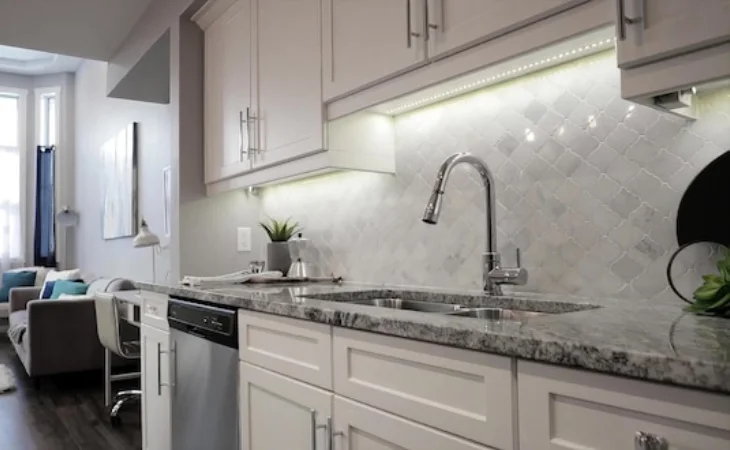
Improve Lighting Where It Matters
Good lighting makes preparation areas easier to use and can improve the overall feel of the room. Consider suitable task lighting beneath overhead cabinets or replacing outdated fixtures with modern alternatives.
Spend on High-impact Details
Pair affordable materials with one or two standout features, such as stylish cabinet handles or a new kitchen tap. Avoid expensive finishes and unnecessary decorative items.
You can also keep a functional kitchen table or use a movable kitchen cart instead of installing a permanent island. This provides extra workspace without the cost of additional cabinetry or relocating plumbing and electrical connections.
- Handle Simple DIY Tasks and Leave Risky Work to Professionals
Doing suitable tasks yourself can reduce labour expenses during a kitchen renovation. The savings depend on your skills, the time available, and whether mistakes could create additional costs.
Suitable DIY Tasks
Depending on your skills and the condition of the kitchen, you may be able to handle:
- Painting walls and suitable cabinet surfaces
- Replacing compatible cabinet handles
- Organising existing cupboards and drawers
- Removing loose decorative items
- Cleaning and preparing surfaces for professional work
Tasks That Require Qualified Trades
Electrical wiring, plumbing, and gas work should be handled by appropriately licensed tradespeople. Structural modifications also require proper assessment and may involve additional approvals.
In NSW, residential building or trade work valued above $5,000 in labour and materials, including GST, generally requires the relevant contractor licence. Check the NSW Government’s kitchen renovation licensing guidance before appointing contractors.
Safety reminder: Do not sacrifice safety or compliance to reduce labour costs. A qualified professional can help identify risks before they become expensive problems.
- Compare Contractor Quotes Before Committing
Multiple written quotes help you understand the likely cost and scope of your renovation. Price alone should not determine which contractor you choose.
Request comparable quotes based on the same measurements, materials, and inclusions. This makes it easier to identify missing items and evaluate whether a lower price represents genuine savings.
What Should a Renovation Quote Include?
Ask contractors to clarify the following details:
- Scope of work and material specifications
- Cabinetry, benchtops, appliances and fixtures included
- Demolition, disposal and site preparation costs
- Plumbing, electrical and installation allowances
- Applicable licensing, insurance and warranty details
- Estimated project timeframe and payment schedule
- How variations and unforeseen repairs will be priced
Read each quotation carefully before signing an agreement. Confirm who coordinates different trades and how changes to the original scope will be approved.
- Renovate in Phases to Manage Costs
A staged kitchen renovation can help households spread spending over time. It works best when each phase is planned around the final design rather than treated as an unrelated project. Start by deciding which improvements must happen together.
Phase 1: Address Essential Repairs
Fix leaks, damaged surfaces, unsafe fittings, and other problems affecting the kitchen’s condition. Address underlying issues before investing in decorative improvements.
Painting or installing new cabinetry over unresolved moisture damage can lead to additional costs.
Phase 2: Improve Functionality
Focus next on storage, cabinetry repairs, preparation space, and necessary surface replacements. Choose finishes and measurements that fit the intended completed design. Where possible, complete related trades and installation tasks together.
Phase 3: Complete Visual Upgrades
Finish with painting, handles, decorative lighting, and other non-essential improvements. These details are generally easier to adjust without changing the underlying kitchen layout. Ask for a complete plan first so you can compare staged work against completing related tasks together.
Sample Budget Kitchen Renovation Plan
Consider a homeowner with a $20,000 budget who wants a more functional kitchen without moving the main services. The following example shows one way to allocate funds for a targeted renovation.
| Budget category | Example allocation |
|---|---|
| Cabinet repairs, refinishing and hardware | $4,000 |
| Benchtop and splashback | $4,000 |
| Selected appliances and fixtures | $2,500 |
| Labour, trades and installation | $5,000 |
| Painting, lighting and flooring improvements | $1,500 |
| Contingency reserve | $3,000 |
| Total budget | $20,000 |
These amounts are illustrative allocations, not market quotes. Your actual costs may differ depending on the kitchen’s dimensions, selected products, and required trade work.
Before starting, complete this checklist:
- Establish the maximum budget and contingency reserve
- Measure the kitchen and existing appliances
- List essential repairs and desired improvements
- Compare materials and their installation requirements
- Obtain and compare detailed contractor quotes
- Confirm relevant licences, insurance and approvals
- Finalise the work sequence and purchase schedule
- Keep a record of expenses, variations and decisions
Frequently Asked Questions
The cheapest approach is usually to retain usable cabinets and appliances while updating finishes and hardware. Painting, replacing handles, improving lighting, and repairing damaged components can refresh the room without a full renovation.
Refacing is generally less expensive than replacing structurally sound cabinets because the existing cabinet boxes stay intact. Full replacement may be more suitable when cabinets are damaged, poorly configured, or unable to meet your storage needs.
A $10,000 budget may cover a cosmetic refresh or some targeted upgrades, depending on the kitchen’s condition and the amount of professional work required. A complete renovation involving new cabinetry, appliances, installation, and multiple trades may require substantially more.
Painting, organising cupboards, and replacing compatible cabinet hardware can be suitable DIY tasks for capable homeowners. Electrical, plumbing, and gas work should be handled by appropriately licensed tradespeople, while structural changes require proper assessment.
A contingency of approximately 15%–20% is a sensible planning allowance for a renovation with uncertain costs. Older kitchens or properties with a history of leaks may require a larger reserve if hidden damage is more likely.
Laminate benchtops, suitable vinyl, or laminate flooring, and ceramic tiles can help control upfront costs. Compare durability, maintenance, and installation expenses, and confirm that any proposed benchtop material meets current Australian requirements.